

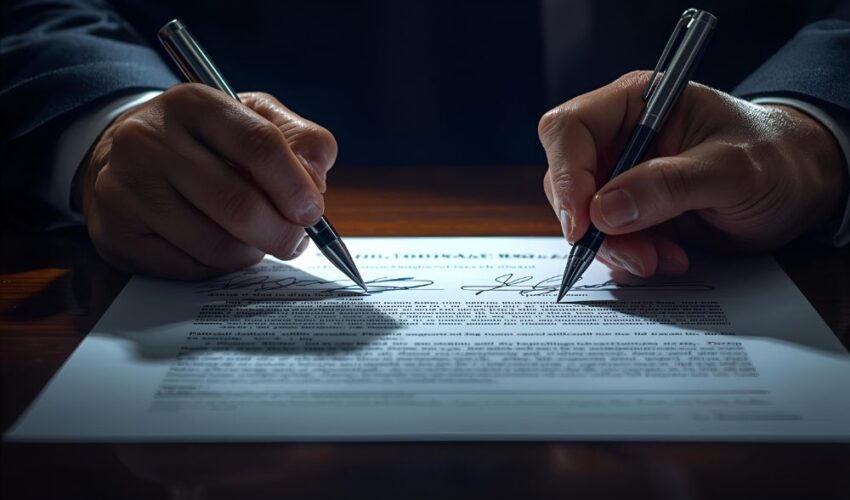
When executing a mortgage deed, ensuring that all legal formalities are properly observed is essential to avoid delays, disputes, or even invalidation of the document. One common question that arises is whether the same individual can witness the signatures of both parties—typically the borrowers—on a mortgage deed. This issue touches on legal requirements, best practice, and the practical realities of property transactions in England and Wales.
In this article, we explore the legal framework surrounding the witnessing of mortgage deeds, the role of witnesses, and whether a single person can validly witness multiple signatures on the same document.
Please click here to find out more about our residential property services.
Free Initial Telephone Discussion
For a free initial discussion with a member of our new enquiries team, get in touch with us today. We are experienced in dealing with all aspects of residential property law and once instructed we will review your situation and discuss the options open to you in a clear and approachable manner. Early expert legal assistance can help ensure you avoid the stress of dealing with these issues on your own. Simply call us on 0345 901 0445 or click here to make a free enquiry and a member of the team will get back to you.
What Is a Mortgage Deed?
A mortgage deed is a legal document that secures a loan against a property. It is signed by the borrower(s) and sets out the terms under which the lender is granted a legal charge over the property. The deed must be executed as a deed, which means it must comply with specific formalities under English law.
These formalities include:
- The document must be in writing.
- It must be signed by the borrower(s).
- The signature(s) must be witnessed.
- The witness must sign the deed and provide their name and address.
Failure to comply with these requirements can render the deed invalid, which may have serious consequences for both the lender and the borrower.
The Role of a Witness
The primary function of a witness is to confirm that the person signing the deed did so voluntarily and in their presence. The witness does not need to understand the contents of the deed or be involved in the transaction. Their role is simply to observe the signing and attest to it.
To be valid, the witness must:
- Be physically present when the signature is made.
- Sign the document themselves.
- Provide their full name and address.
Importantly, the witness must be independent. That means they should not be a party to the deed or have a financial interest in the transaction.
Can One Person Witness Two Signatures?
The short answer is: yes, in many cases, the same person can witness two signatures on a mortgage deed—provided certain conditions are met.
When Is It Permissible?
If two borrowers are signing the same mortgage deed, and both do so in the presence of the same witness, that witness may validly attest both signatures. This is commonly done in practice, especially when the borrowers are present together and the witness is a neutral third party.
However, the witness must:
- Be present when each individual signs.
- Sign the deed in the appropriate place for each signature.
- Clearly indicate that they witnessed both signatures.
The witness should not sign the deed in advance or after the fact. They must observe each signature being made in real time.
Practical Example
Consider a couple purchasing a property together. They attend a meeting with their solicitor and sign the mortgage deed in the solicitor’s presence. The solicitor, acting as an independent witness, observes both individuals signing and then signs the deed twice—once for each signature—providing their name and address.
This is a valid execution of the deed.
When Is It Not Advisable?
While legally permissible, using the same witness for multiple signatures is not always advisable. Certain lenders or conveyancers may prefer separate witnesses for each signature to avoid any potential challenge to the validity of the deed.
Situations where caution is warranted include:
- Remote signing: If the borrowers are signing in different locations or at different times, the same witness cannot validly witness both signatures unless they are physically present for each.
- Conflict of interest: If the witness has a close personal or financial relationship with one or both signatories, their independence may be questioned.
- Lender requirements: Some lenders have specific policies requiring separate witnesses for each borrower. These are not legal requirements but contractual preferences.
In such cases, it is best to follow the lender’s instructions or seek legal advice to avoid complications.
Legal Framework
The execution of deeds in England and Wales is governed by the Law of Property (Miscellaneous Provisions) Act 1989. Section 1 of the Act sets out the requirements for a valid deed, including the need for witnessing.
There is no statutory prohibition against one person witnessing multiple signatures, provided they are present for each and meet the criteria for being a valid witness.
The Land Registry also accepts deeds witnessed by the same individual, as long as the execution is properly documented and the witness details are clearly recorded.
Best Practice for Witnessing Mortgage Deeds
To ensure that a mortgage deed is properly executed and unlikely to be challenged, the following best practices should be observed:
- Use an independent witness: Avoid using family members, co-owners, or anyone with a financial interest in the transaction.
- Ensure physical presence: The witness must be physically present when each signature is made. Remote witnessing is generally not accepted.
- Record details clearly: The witness should sign next to each signature they have witnessed and provide their full name and address.
- Follow lender instructions: If the lender requires separate witnesses, comply with their requirements even if not legally necessary.
- Avoid pre-signed documents: The deed should not be signed in advance or witnessed after the fact.
Witness Eligibility
There is no formal qualification required to act as a witness, but they must be:
- Over 18 years of age.
- Of sound mind.
- Not a party to the deed.
- Not a close relative or someone with a financial interest in the transaction.
Solicitors, legal executives, and other professionals often act as witnesses, particularly in formal settings. However, a neighbour, colleague, or friend may also be suitable, provided they meet the criteria above.
Common Misconceptions
There are several myths surrounding the witnessing of mortgage deeds:
- “Only a solicitor can witness a deed”: False. Any independent adult can act as a witness.
- “Each signature must have a different witness”: Not necessarily. One person can witness multiple signatures if present for each.
- “Witnesses must understand the document”: Incorrect. They only need to observe the signing.
- “Remote witnessing is acceptable”: Generally not. Physical presence is required.
Clarifying these misconceptions can help avoid unnecessary delays or errors during property transactions.
Legal Advice and Support
At Blackstone Solicitors, we understand the importance of getting the details right when executing legal documents. Whether you are buying a property, refinancing, or acting as a witness, our experienced team can guide you through the process with clarity and confidence.
We offer:
- Advice on deed execution and witnessing requirements.
- Assistance with mortgage and conveyancing transactions.
- Support for lenders and borrowers across England and Wales.
- Document review and compliance checks.
Our goal is to ensure that your transaction proceeds smoothly and that all legal formalities are properly observed.
Conclusion
In summary, the same person can witness two signatures on a mortgage deed in England and Wales, provided they are physically present for each signing and meet the criteria for being an independent witness. While this is legally acceptable, it is important to follow best practice and any specific instructions from lenders or conveyancers.
Proper execution of mortgage deeds is essential to ensure their validity and enforceability. At Blackstone Solicitors, we are here to help you navigate the legal requirements with confidence and precision.
How we can help
We have a proven track-record of helping clients deal with the legal implications of their mortgage. We are a multidisciplinary firm and have all the expertise inhouse to satisfy the most exacting requirements of our clients. We will guide you through all the necessary legal due diligence in a comprehensive and timely manner. We firmly believe that with the right solicitors by your side, the entire process will seem more manageable and far less daunting.
Deciding when (or whether) to incorporate, what kind of ownership
How to Contact Our Residential Property Solicitors
It is important for you to be well informed about the issues and possible implications of buying a residential property with a mortgage. However, expert legal support is crucial in terms of ensuring a positive outcome to your purchase.
To speak to a member of our New Enquiries Team today, simply call us on 0345 901 0445, or click here to make a free enquiry. We are well known across the country and can assist wherever you are based. We also have offices based in Cheshire and London.
Disclaimer: This article provides general information only and does not constitute legal advice on any individual circumstances.
