

Introduction
If you are bringing a discrimination claim in the Employment Tribunal, one of the most important documents you will prepare is your Schedule of Loss. This document sets out the compensation you are seeking and explains how those figures are calculated.
A well drafted Schedule of Loss does more than list numbers. It tells the financial story of your claim. It shows the Tribunal how the discrimination has affected you, both financially and personally.
At Blackstone Solicitors, we assist clients across England and Wales in preparing clear and persuasive Schedules of Loss. In this guide, we explain what a Schedule of Loss is, what it should include, and how to prepare one effectively.
Free Initial Telephone Discussion
For a free initial discussion with a member of our New Enquiries Team, get in touch with us today. We are experienced in dealing with all the legal aspects of Employment Law, and once instructed, we will review your situation and discuss the options open to you in a clear and approachable manner. Early expert legal assistance can help ensure you are on the best possible footing from the start and also avoid the stress of dealing with these issues on your own. Simply call us on 0345 901 0445 or click here to make a free enquiry and a member of the team will get back to you.
What Is a Schedule of Loss
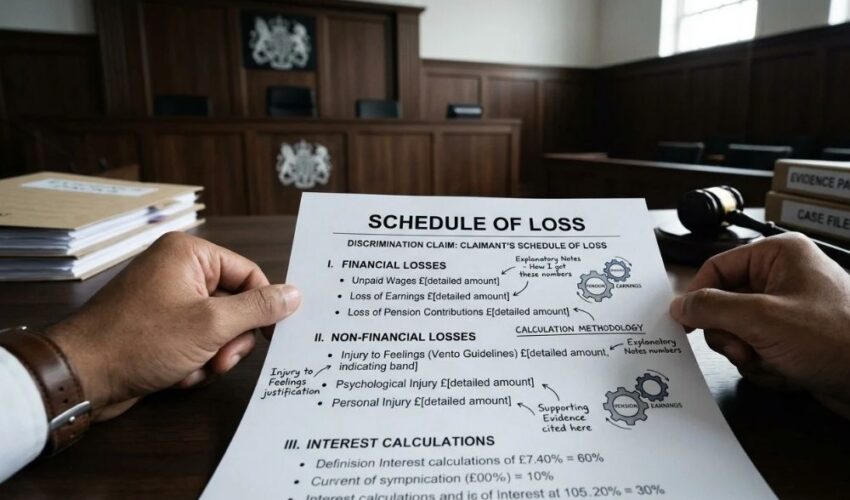
A Schedule of Loss is a document used in Employment Tribunal proceedings to outline the compensation a claimant is seeking. It breaks down each head of loss and provides a calculation for each element.
In discrimination claims, compensation is not limited to financial losses. It can also include awards for injury to feelings and, in some cases, personal injury.
The purpose of the Schedule is to:
- Inform the respondent of the value of the claim
- Assist the Tribunal in understanding the losses
- Provide a framework for settlement discussions
It is usually prepared after the claim has been issued but may be updated as the case progresses.
Why a Schedule of Loss Matters
A carefully prepared Schedule of Loss can have a significant impact on your case.
First, it demonstrates credibility. A clear and realistic Schedule suggests that the claim is well considered.
Secondly, it supports negotiation. Many cases settle before a final hearing. A detailed Schedule allows both parties to assess the risks and potential outcomes.
Finally, it helps the Tribunal. Judges rely on the Schedule when considering compensation. If the document is unclear or incomplete, it may affect the award.
Key Heads of Loss in Discrimination Claims
Discrimination claims can involve several different types of compensation. Each must be addressed in the Schedule of Loss.
Past Loss of Earnings
This covers income you have already lost as a result of the discrimination. It may include:
- Salary or wages
- Bonuses and commission
- Overtime
- Benefits such as pension contributions or private healthcare
You will need to calculate what you would have earned had the discrimination not occurred, and compare it to what you actually received.
Future Loss of Earnings
If the discrimination has affected your ability to work in the future, you may claim future loss of earnings.
This requires an assessment of:
- How long you are likely to remain out of work or in lower paid employment
- Your expected earnings during that period
Future loss can be more complex and may involve assumptions about the job market and your career prospects.
Loss of Statutory Rights
In some cases, you may claim compensation for the loss of statutory employment rights. This reflects the value of rights such as protection from unfair dismissal.
The amount awarded is usually modest, but it is still important to include it where appropriate.
Injury to Feelings
In discrimination claims, you can seek compensation for injury to feelings. This reflects the emotional impact of the discrimination.
Awards are assessed by reference to guideline bands. These bands vary depending on the severity of the conduct.
When preparing your Schedule, you should:
- Identify the appropriate band
- Explain why your case falls within that range
Personal Injury
If the discrimination has caused a recognised medical condition, such as anxiety or depression, you may claim for personal injury.
Medical evidence is usually required. This may include a report from a GP or specialist.
Aggravated Damages
In some cases, additional compensation may be awarded where the employer’s conduct has been particularly serious or offensive.
This is not available in every case, but it should be considered where the behaviour has caused additional distress.
Interest
Interest can be added to certain elements of your claim. This compensates you for the delay in receiving payment.
The calculation of interest can be technical, but it should not be overlooked.
How to Calculate Your Losses
Preparing a Schedule of Loss involves careful calculation. Accuracy is essential.
Gather Supporting Documents
Start by collecting relevant documents, such as:
- Payslips
- Employment contracts
- P60 forms
- Bank statements
- Job applications and rejection letters
These will help you calculate your losses and provide evidence to support your figures.
Calculate Net and Gross Figures
Some elements of your claim should be calculated on a net basis, while others are assessed on a gross basis.
Understanding the distinction is important. If you are unsure, legal advice can be helpful.
Be Realistic
It can be tempting to claim the highest possible figures. However, unrealistic claims can undermine your credibility.
Your Schedule should reflect genuine losses and be supported by evidence wherever possible.
Structuring Your Schedule of Loss
A clear structure makes your Schedule easier to understand.
Use Headings and Subheadings
Divide the document into sections for each head of loss. This allows the reader to follow your calculations.
Provide a Breakdown
For each item, show how the figure has been calculated. For example, set out the weekly or monthly loss and the relevant period.
Include Totals
Provide subtotals for each section and a final total at the end of the document.
Add Explanatory Notes
Where necessary, include brief explanations. This is particularly helpful for complex calculations or assumptions.
Updating Your Schedule of Loss
Your Schedule of Loss is not a static document. It should be updated as your case progresses.
For example:
- If you find new employment
- If your financial situation changes
- If additional losses arise
Keeping the Schedule up to date ensures that it remains accurate and relevant.
Common Mistakes to Avoid
There are several common pitfalls when preparing a Schedule of Loss.
Failing to Include All Heads of Loss
Some claimants focus only on lost earnings and overlook other elements such as injury to feelings or interest.
Lack of Evidence
Unsupported figures are unlikely to carry weight. Wherever possible, back up your calculations with documents.
Overcomplicating the Document
While detail is important, excessive complexity can make the Schedule difficult to follow. Aim for clarity.
Ignoring Future Loss
Future loss can be significant, particularly in serious cases. It should not be overlooked.
Using the Schedule of Loss in Settlement Discussions
A well prepared Schedule of Loss is a powerful negotiation tool.
It allows both parties to understand the value of the claim and assess the risks of proceeding to a hearing.
During settlement discussions:
- Be prepared to justify your figures
- Consider the strengths and weaknesses of your case
- Remain open to negotiation
In many cases, the Schedule forms the basis of settlement offers.
How Blackstone Solicitors Can Help
At Blackstone Solicitors, we provide expert support in preparing Schedules of Loss for discrimination claims across England and Wales.
We understand that every case is different. Our approach is tailored to your circumstances, ensuring that your losses are presented clearly and accurately.
Our services include:
- Identifying all relevant heads of loss
- Calculating past and future financial losses
- Advising on injury to feelings awards
- Drafting clear and structured Schedules of Loss
- Supporting settlement negotiations
We aim to maximise your recovery while presenting your claim in a professional and persuasive manner.
Conclusion
Preparing a Schedule of Loss is a crucial step in any discrimination claim. It requires careful thought, accurate calculation and clear presentation.
A strong Schedule does more than quantify your losses. It supports your case, informs negotiations and assists the Tribunal in reaching a fair outcome.
By gathering the right evidence, structuring your document effectively and keeping it up to date, you can ensure that your claim is presented in the best possible light.
If you need assistance preparing a Schedule of Loss, Blackstone Solicitors is here to guide you through the process with clarity and confidence.
How to Contact Our Employment Law Solicitors
It is important for you to be well informed about the issues and possible implications of Employment Law. However, expert legal support is crucial in terms of ensuring a positive outcome to your case.
To speak to our Employment law solicitors today, simply call us on 0345 901 0445, or click here to make a free enquiry. We are well known across the country and can assist wherever you are based. We also have offices based in Cheshire and London.
Please visit our website to see all the Employment Law services we offer: https://blackstonesolicitorsltd.co.uk/employment-law-services/
Disclaimer: This article provides general information only and does not constitute legal advice on any individual circumstances.
